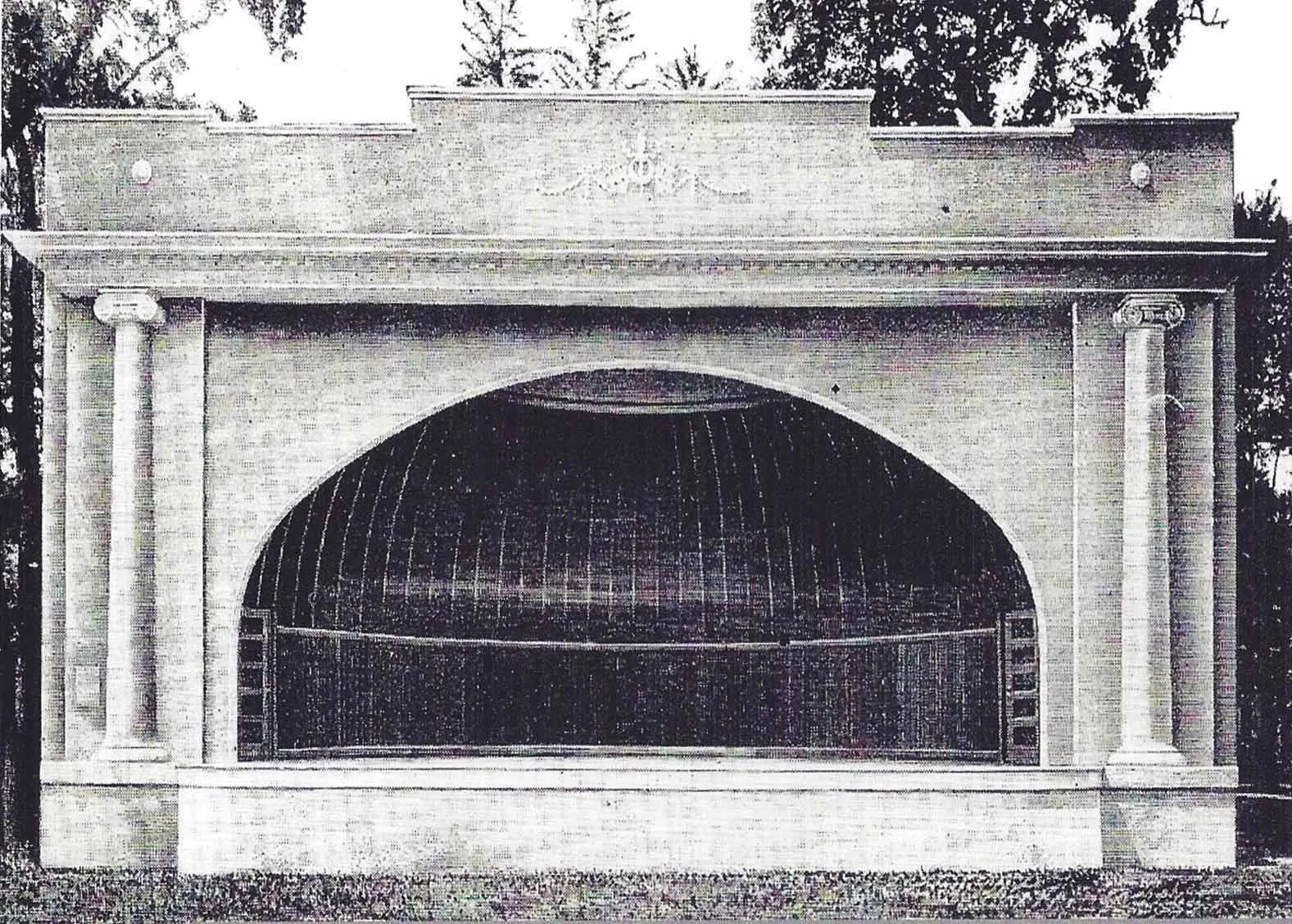
Elkhorn Bandshell, constructed in 1926.
Our Bandshell Legacy
The history of the Elkhorn Bandshell goes back to the early 1920s, when brass instrument manufacturer Frank Holton & Co. was the largest employer in the City of Elkhorn. Wanting an outdoor gathering space for his community and opportunity for his “Frank Holton Band” to perform for their families and friends, Holton sought an innovative design to showcase his beautiful products and bring folks to the Elkhorn town square.
Holton read a Popular Mechanics magazine article about a young architect named George Pheby who had been tasked by the City of Phoenix to do just that one of their parks. It was lauded as a masterclass in acoustic design, explained by Pheby’s free-standing interior frame of redwood and spruce wood on the interior of the stage that created similar properties as the interior of fine stringed instruments. The bandshell interior was described as a hollow-body wood resonator, and Pheby was selling plans for his design in the magazine to other interested communities. It should be noted that Pheby did not have a musical background and may have relied on the expertise of friend and Native American band director, Peter A. Venne, with this design as well.
Holton traveled south with a contingent to nearby Mt. Morris, Illinois, where residents had recently purchased the plans and constructed a Pheby-designed bandshell, to see this concept in person. Holton and his team were so impressed, that a set of his own plans was purchased shortly thereafter and constructed in the Walworth County square in 1926. Holton himself funded $5,000 for the project, with an additional $1,000 given by the newly-formed Elkhorn Kiwanis Club (estd. 1922).
While definitive records can’t be found to indicate exactly how many sets of Pheby’s bandshell plans were sold, we have confirmation that at least five were built in the United States (Phoenix, AZ, Norristown, PA, Mt. Morris, IL, Menomonee, WI, and Elkhorn, WI; one set of plans was also sold to a businessman in Christchurch, New Zealand, but there is no evidence of it ever being constructed.
One integral design modification to the Greek Revival exterior of the shell that the Elkhorn team understood was necessary to protect the wooden interior from the harsh Wisconsin winters was a tarpaulin cover. This may very be what has attributed to maintaining its original integrity for so long. While the other Pheby shells have since fallen into disrepair, succumbed to vandalism, and have had to be torn down or severely modified, the Elkhorn Bandshell has remained intact. The only significant change was a new foundation needed in 1962 when the bandshell was moved to its new home west of town (now Sunset Park) to make way for the Government Center downtown. Only slight changes have been made over the years, such as sealing the rear windows, painting, new roof, and replacing the tarpaulin cover with a mechanical garage door in the 1990s.
What remains the same about the Elkhorn Bandshell is the hollow-body wooden resonators' incredible acoustical properties. Local lore to support it as an engineering marvel has spanned nearly 100 years: Variations of the same story can still be heard in the local Elkhorn diners today regarding the shell’s design, where workers dropped a hammer/nail on the stage floor during construction and the resonator amplified the sound so well that it could be heard from 100 feet away/across the square/ three blocks away, depending on who is telling the tale. Another anecdotal story describes students visiting from the Wisconsin School for the Deaf in nearby Delavan to “hear” a concert: They entered the back-of-the-house and placed their hands on the soundboard of the hollow-body resonator and were able to dance “in perfect time to the music…receiving their tempo from the vibrations.”
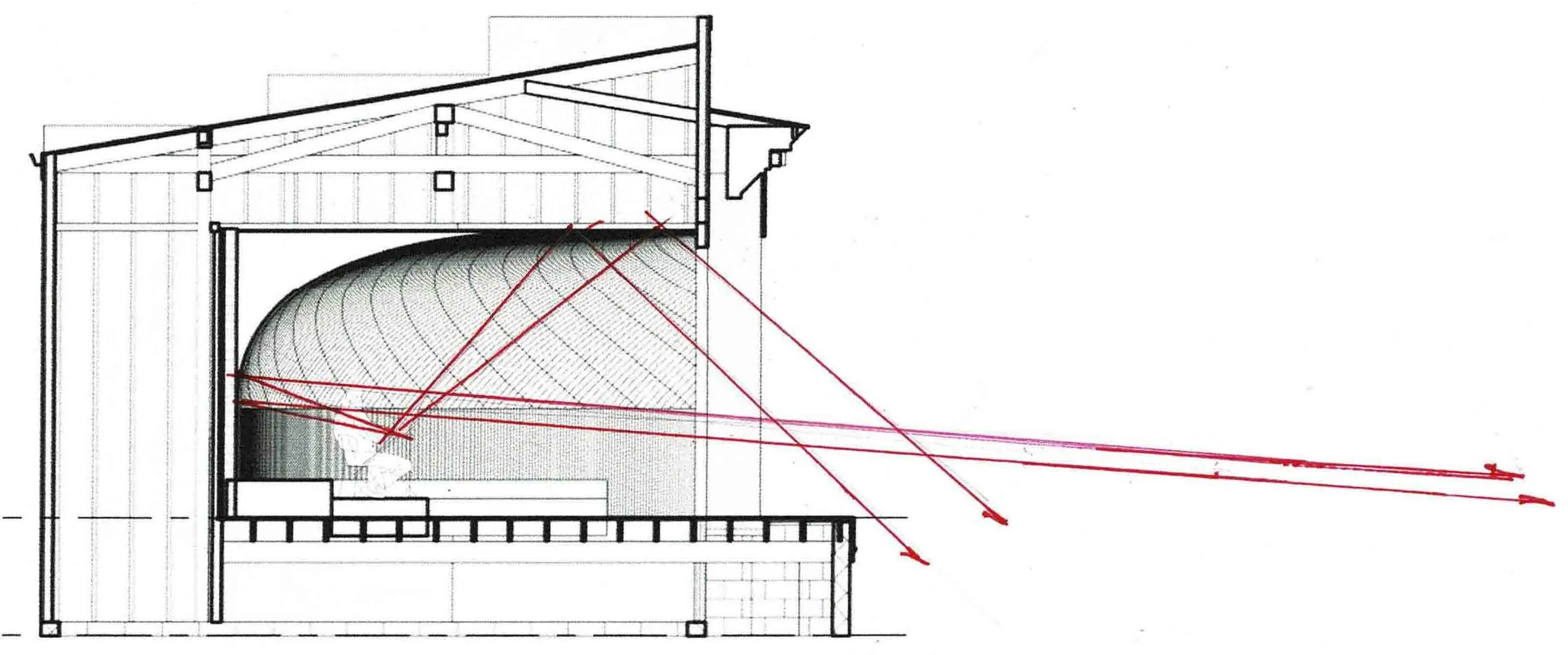
In 2024, a preliminary analysis by acoustic engineer Scott Reidel examined the design more closely and was able to back up Pheby’s design genius: The interior wooden wall behind the performers serves as a resonating-chamber or “resonator” and is akin to a cello, violin, or similar hollow-body wooden instrument. Pheby even added “air pockets”, which acoustical professionals call “tonal slots”, at the front ends of the resonator to complete the effect. Historic Preservation Engineer Neal Vogel of Restoric, LLC noted with particular interest that “while Pheby specified tonal woods, which were readily available in the West for construction, Elkhorn builders still adhered to those specifications and acquired the very same West Coast redwood and spruce as shown in the original plans.”
The bandshell was listed on the US Department of the Interior’s “National Register of Historic Places” for Local Significance in 2012, recognizing its cultural importance for the City of Elkhorn and surrounding communities. With a grant received from the Jeffris Family Foundation Heartland Fund in 2024, the City was able to undertake a nine-month Historic Structure Report & Analysis of the bandshell with Restoric, LLC. Upon this further architectural evaluation by Vogel and his team, with contributing assistance from historian Carol Cartwright, the structure was resubmitted to the Wisconsin State Historic Preservation Office for listing on the State’s Register of Historic Places and State-level Architectural Significance on the National Register. This request was unanimously approved by the State’s Historic Preservation Review Board in February 2024 and by the National Park Service in August 2025. Today, the Elkhorn Bandshell resides as the only bandshell in the State of Wisconsin with this designation and is among just 21 listed on the National Register, alongside the Hollywood Bowl in Los Angeles, Daytona Beach Oceanfront Bandshell, and Naumburg Bandshell in New York, as one of the most architecturally significant pieces of acoustical engineering in United States history.
The Bandshell Today
The City of Elkhorn and its residents continue to utilize the bandshell on a limited basis throughout the summer months. The Holton Foundation Band performs six concerts there each summer, as it has done since its construction in 1926. A number of other bands and plays perform there as well. The largest performance of the year is the July 4th concert and fireworks event, where thousands of residents enjoy an evening of festivities in Sunset Park on the Friday before Independence Day each year.
An ad-hoc committee of community stakeholders and residents formed in May 2025 to oversee a new future usage plan for the bandshell. The goal is to grow both its functionality and recognition throughout the region as a community gathering space for arts, friendship, and fellowship in Elkhorn. An ambitious expanded usage plan is currently in development to do just that, which ensures it viability, sustainability, and purpose for another 100 years. Those interested in learning more and/or assisting with this effort should contact the committee to hear more!
A restoration plan is in its early stages as well. Years of use, environmental wear and tear, and a lack of ongoing maintenance throughout the years have allowed it to fall into a state of disrepair. This treasure’s current state is cracked, sagging, with painted-over graffiti and peeling paint.
A Historic Structure Report and assessment performed by Restoric, LLC in 2024 confirmed that an extensive restoration effort is now needed to add functionality and return stability to the structure. The most notable issues are a reinforcement of the roof and floor, address cracking and severe damage to the outer walls, and calls for the complete replacement of the overweight exterior door that was added to the bandshell in the 1990s. Other recommended improvements include the replacement of the electrical and lighting features with a safer, more efficient system, the inclusion of an internal lift to bring the stage into ADA compliance and assist with heavy equipment/instruments on stage, security cameras, new landscaping, and a potential dance floor at the front. The estimated cost of such improvements beginning in 2028 is $1.2 million dollars.
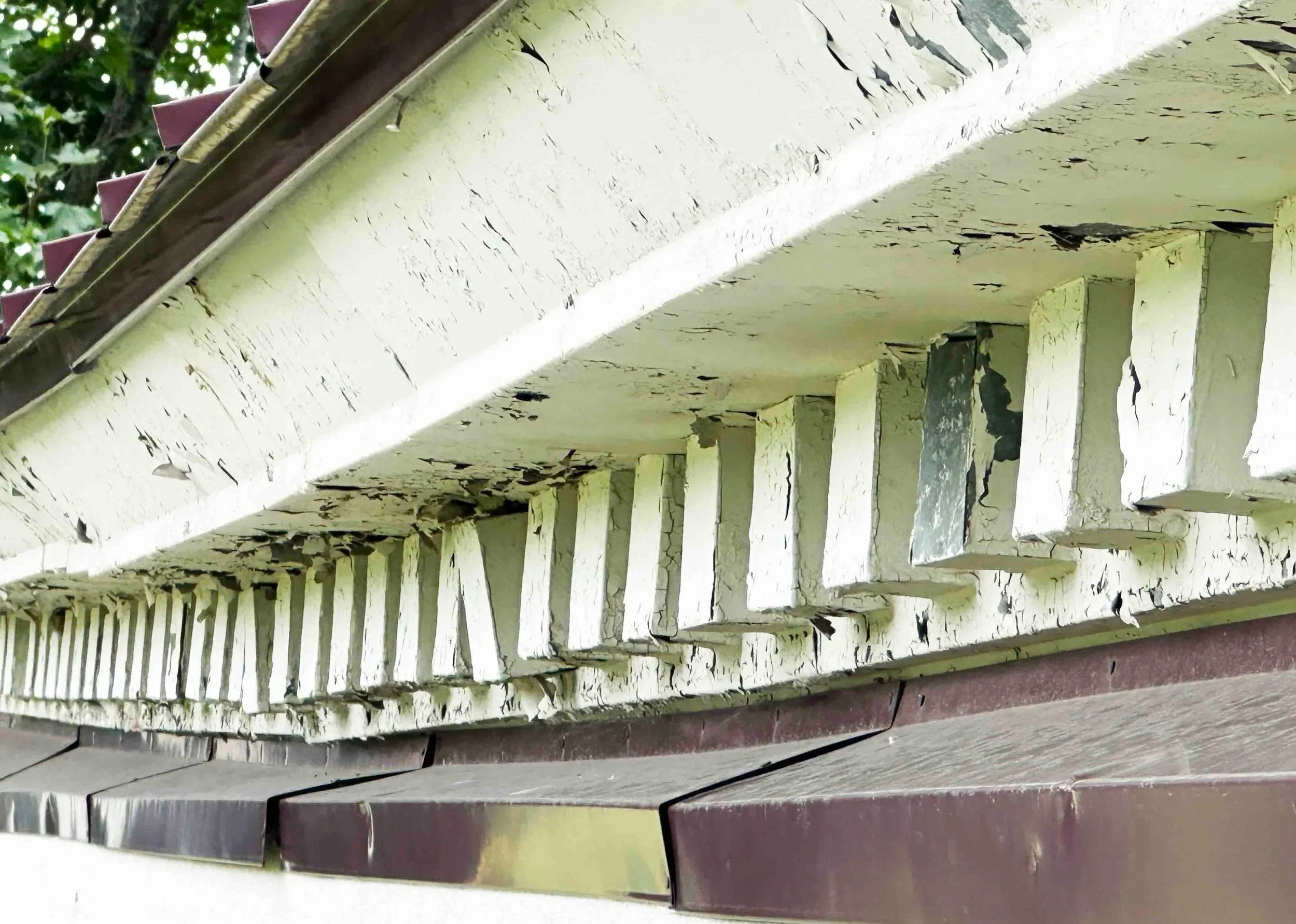
Exterior cornice above stage.
Jeffris Foundation Help
In Summer 2025, the City of Elkhorn received an invitation to apply for grant assistance from the Jeffris Family Foundation in Janesville, Wisconsin. Jeffris’ financial support of historically significant properties throughout the Midwest spans decades, including the Al. Ringling Theatre in Baraboo, Wisconsin, President Warren G. Harding’s home in Marion, Ohio, and the Potosi Brewery. In August, Mayor Tim Shiroda was notified that the City of Elkhorn was selected as one of three recipients of Jeffris’ 2025 Capital Campaign Challenge Grant.
Under the terms of the grant, the City has three years to lead a $600,000 fundraising campaign that will breathe new life into the historic bandshell. If successful, the Jeffris Foundation will give $1 for every $2 that was raised locally for the project, up to $300,000 to complete the campaign. The City itself can also utilize municipal recreation funds to assist with the restoration effort as well.
With this support and that of the community, we hope to help breathe new life into the historic bandshell: Beautification, modernizations, and a sustainability plan that will ensure this community treasure can be enjoyed for generations to come!
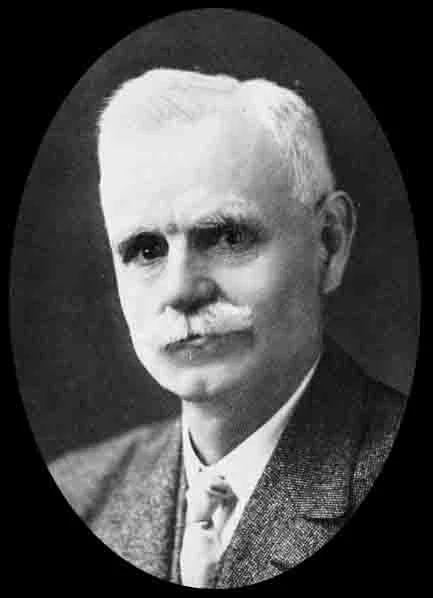
Frank Holton, owner of Holton & Co.
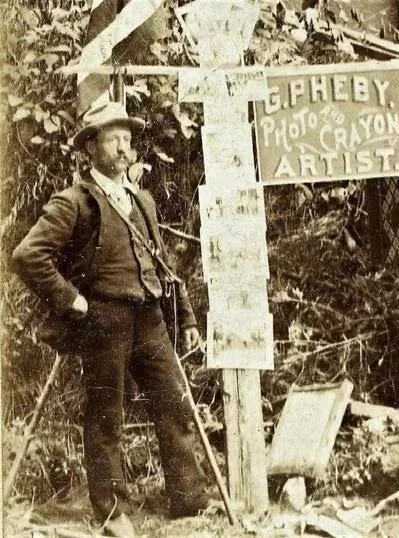
George Pheby, architect.
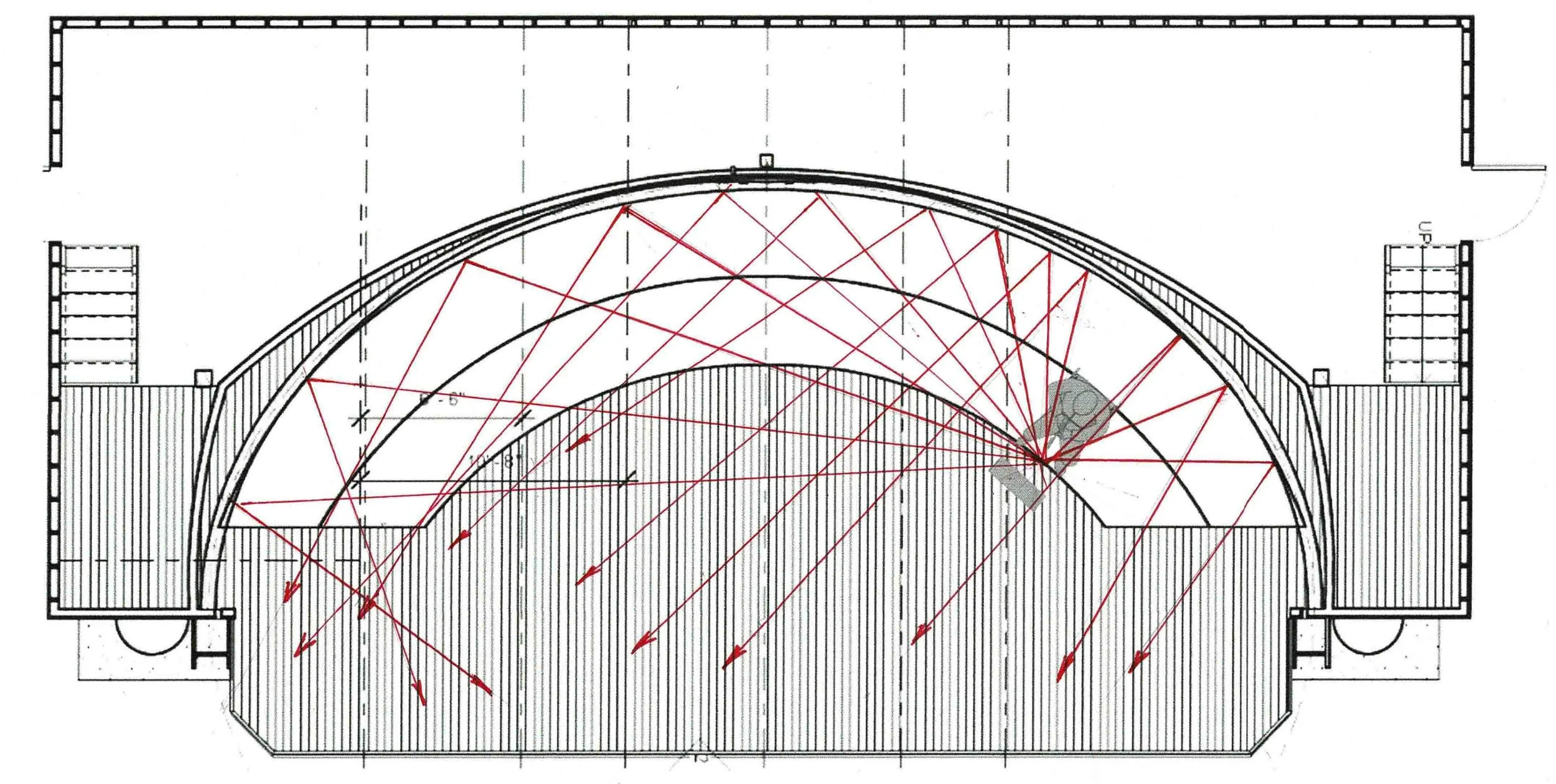
Preliminary acoustic analysis conducted by Scott R. Reidel & Associates, Ltd. in 2024 reveals the design’s reliance on vibration and natural airborne acoustic sound waves against the wood resonator and tonal slots hidden within the frame to amplify and transmit sound. Speakers installed on the structure in 1962 were removed in 1975 when they were found to be ineffective and unnecessary.
Holton Band Concert, September 2025.
Contact us
Interested in working together? Fill out some info and we will be in touch shortly. We can’t wait to hear from you!